Loading image...

Radiant Heaters
Warmth, without compromise
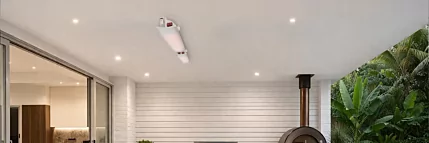
Radiant heaters deliver targeted warmth with even heat distribution, with no drafts and no cold spots, creating a quiet, allergy‑friendly ambience indoors and out. Engineered with infrared technology, HEATSCOPE® radiant heaters pair energy‑efficient performance with refined design, offering fast, comfortable heat and lower running costs for contemporary spaces.
Models
Showing 5 items of 5
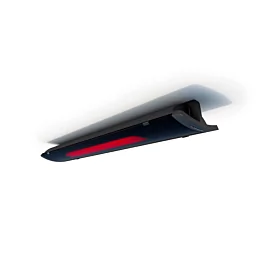
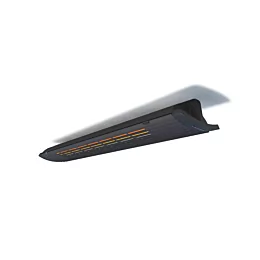
Spot 1600W Electric Radiant Heater · HEATSCOPE® Heaters
Spot 2800W Electric Radiant Heater · HEATSCOPE® Heaters
Vision 3200W Electric Radiant Heater · HEATSCOPE® Heaters
Pure+ 3000W Electric Radiant Heater · HEATSCOPE® Heaters
Next 3000W Electric Radiant Heater · HEATSCOPE® Heaters





Loading image...

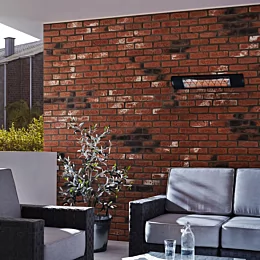
Carbon spiral heating technology
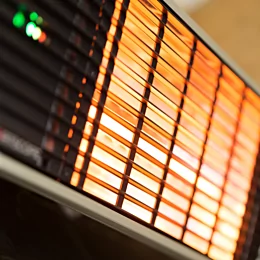
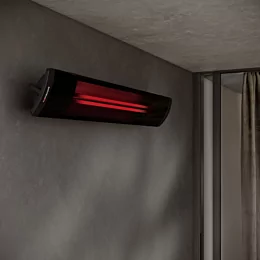
Dual carbon heating spirals power our radiant heaters with reduced visible light and a naturally cosy feel.
Loading image...


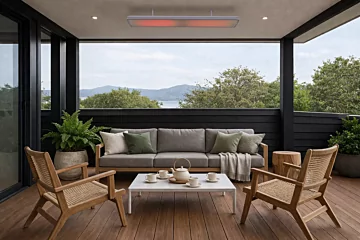
Energy‑efficient radiant heaters
HEATSCOPE radiant heaters convert 90–94% of energy into ambient warmth for low running costs and high comfort.
Loading image...

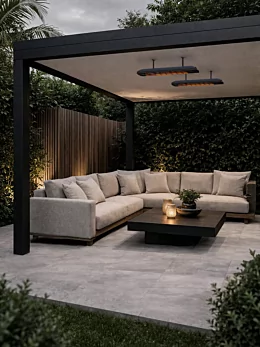
Rapid heat‑up times
Spot radiant heaters reach full output in about 15 seconds; Pure and Vision models ramp quickly owing to the glass‑ceramic front.
Two‑stage output control
Radiant heaters with 50% and 100% output modes via remote or hardwire for precise zone heating and energy optimisation.
Loading image...

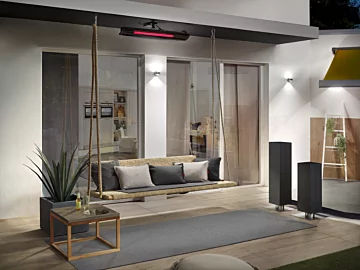
Outdoor‑ready IP protection
Pure radiant heaters are IP65 rated for exposed installs; Spot and Vision are IP24 for well‑covered areas.
Learn More
Radiant Heaters
Outdoor Radiant Heaters
FAQ's
How much does it cost to run a HEATSCOPE® outdoor heater per hour?
Running a weather-resistant HEATSCOPE outdoor radiant heater costs roughly the heater's wattage divided by 1,000, multiplied by your local electricity rate per kWh. A 3,000 W heater run for one hour uses 3 kWh, so at an illustrative rate of $0.20/kWh it costs about $0.60 per hour to run.
Per-hour figures across the range, at the same illustrative $0.20/kWh rate:
- 1,600 W compact heater: $0.32/hour at full output, $0.16/hour at 50%
- 2,800 W heater: $0.56/hour at full output, $0.28/hour at 50%
- 3,000 W heater: $0.60/hour at full output, $0.30/hour at 50%
- 3,200 W heater: $0.64/hour at full output, $0.32/hour at 50%
Actual cost depends on your local electricity rate, so replace the illustrative figure with your own tariff for an accurate calculation. A two-hour session at full output on a 3,000 W heater sits near $1.20 at that rate; running the same session at the 50% setting drops the cost to around $0.60.
Mid-wave infrared technology converts up to 94% of energy directly into directed warmth, with minimal energy lost to air or wind dispersion. That efficiency, combined with permanent outdoor installation and weather-resistant construction, is what keeps the cost per comfortable hour low across patios, terraces, and hospitality settings.
What is infrared radiant heating technology?
Infrared radiant heating technology uses direct heat transfer: electromagnetic waves deliver warmth from the heater to people and surfaces, bypassing the surrounding air entirely. HEATSCOPE radiant heaters emit mid-wave infrared radiation that is absorbed by solid objects (people, floors, surfaces) on contact. Because air is largely transparent to these wavelengths, warmth is not lost to wind, draughts, or dispersal in open spaces.
Mid-wave infrared is quickly absorbed by solid surfaces and skin, replicating the natural sensation of direct sunlight without heating the air around you. HEATSCOPE's dual carbon spiral heating elements emit this radiation through ceramic glass fronts with minimal visible light, delivering quiet, directed warmth. Designed to German engineering standards, this technology performs consistently indoors and in exposed outdoor environments.
Can outdoor radiant heaters be used in covered outdoor areas like pergolas?
Yes, weather-resistant outdoor radiant heaters are purpose-built for covered areas like pergolas, and a sheltered structure is the ideal setting for infrared heating. Because the heat travels in a direct beam to warm people and surfaces rather than the surrounding air, a pergola roof helps contain that warmth without the wind dispersion open patios experience.
Pergola installation comes down to clearances and mount choice. Heatscope models accept wall or ceiling mounting across the range, with a minimum 1,800 mm [70.9 in] clearance from the lower edge of the unit to the floor, and 200 mm [7.9 in] from any power source. When the pergola ceiling sits lower than standard, extension rods of 100, 300 or 500 mm drop the heater to the correct height. Timber pergolas are fine with Heatscope spacers, which maintain the recommended distance from combustible material. Installation must follow local electrical wiring standards and be carried out by a licensed electrician, connected through a residual current device (RCD).
What are the pros and cons of radiant heating?
Direct heat transfer is the fundamental advantage of radiant heating, which warms people and objects in its path rather than heating the surrounding air. This delivers several distinct benefits: energy conversion rates of 87–94%, near-instant warmth within 15–60 seconds depending on the model, and silent operation with no moving parts. Radiant heaters produce no emissions, odours, or ash, and require no gas lines, flue systems, or ventilation infrastructure, making them ideal for retrofit installations and spaces where traditional heating isn’t practical.
The trade-off is directional coverage. Radiant heaters warm only the areas within their line-of-sight. Someone standing outside the beam path receives minimal benefit. This also means they function as zone heaters rather than whole-room ambient heating, effective for creating comfort zones in outdoor entertaining areas or specific indoor spaces, but less efficient for warming every corner of large rooms simultaneously. Covering expansive areas requires multiple units, which carries a higher upfront cost than a single centrally-mounted system. Installation demands appropriate electrical infrastructure (220–240V, professional installation), and in cold climates, multiple heaters may be necessary to achieve ambient comfort comparable to forced-air or hydronic systems.
Rather than limitations, many customers view these characteristics as precision advantages: the ability to heat only occupied spaces, reduce energy consumption, and extend the usable season in outdoor areas without the capital expense of full-home heating infrastructure.
What is two-stage output control on HEATSCOPE® heaters?
Two-stage output control lets weather-resistant HEATSCOPE radiant heaters switch between 100% and 50% power, so you can match heat delivery to conditions without turning the heater off. On a mild evening, 50% output keeps a patio comfortable while roughly halving energy draw; on colder nights, full power delivers the direct infrared warmth the heaters are engineered for.
The two levels are switchable from a wall switch, an included or optional 2-step infrared remote, or, with a WiFi wall switch, a smartphone and voice assistants like Alexa and Google Assistant. One remote can pair with multiple heaters, which is useful across larger covered areas or split zones in a restaurant or bar setting where different sections need different heat levels at once. ZigBee accessories extend this further on select models for motion-triggered or scene-based control.
Because HEATSCOPE heaters draw significant power at full output, the levels are fixed at 50% and 100%; a standard dimmer is not compatible. That fixed step is deliberate. It protects the heating elements and keeps infrared output stable and efficient at both settings.
What is the difference between a radiant heater and a convection heater for outdoor use?
Weather-resistant radiant heaters warm people and surfaces directly through infrared waves, while convection heaters warm the surrounding air, making radiant the practical choice for outdoor use. Air is largely transparent to mid-wave infrared, so the energy travels through open space and is absorbed by skin, tables, floors and nearby objects, much like warmth from the sun on a cool day.
Convection relies on still air to build a pocket of warmth around you. Outside, that pocket drifts away on the first breeze, taking comfort with it.
Heatscope's carbon spiral technology converts up to 94% of its energy into directed infrared heat, so warmth holds its focus even in exposed patios, courtyards and open-fronted venues. Start-up is near-instant, and because there is no flue or ventilation requirement, placement follows the design of the space rather than the other way around.
How many amperes do HEATSCOPE® radiant heaters draw?
- HEATSCOPE® radiant heaters draw between 6.96 and 13.91 amperes at full power, depending on the wattage rating of your model. The Spot 1600W draws 6.96A; the Spot 2800W draws 12.17A; the Vision 3200W and Pure 3000W both draw approximately 13A at 100% power.
All HEATSCOPE® models operate on 220–240V single-phase supply at 50–60Hz. Most models feature dual power stages, which means you can also run them at 50% power; at this setting, the current draw reduces proportionally. For example, a Vision 3200W operating at 50% would draw roughly 6.95A instead of the full 13.91A.These specifications are essential for circuit planning. Confirm your installation supports the required amperage with a qualified electrician before commissioning the heater.
How quickly do HEATSCOPE® outdoor heaters warm up?
HEATSCOPE weather-resistant infrared heaters reach full output in under 15 seconds on most models; the glass-fronted range reaches comfortable warmth in under 60 seconds. You feel the warmth almost the moment the heater switches on, because infrared radiation travels through the air like sunlight and warms people and surfaces directly rather than heating the surrounding atmosphere.
That direct-to-body transfer is why outdoor patio heating with infrared behaves differently from a gas patio heater or a fan heater. There is no lag while the air temperature climbs, and almost no heat loss to wind or open sides of a pergola. Two practical benefits follow:
- Guests arriving to a cold terrace feel warmth within seconds of the heater being switched on, rather than waiting 20 to 30 minutes for air temperature to rise.
- Instant-on, instant-off operation means you only run the heater during occupied moments, keeping energy use close to actual occupancy time.
Carbon fibre elements are rated for at least 10,000 operating hours, and radiant efficiency across the range sits between 87 and 94 percent, so that fast warmth is delivered consistently across years of residential or commercial use.
Which HEATSCOPE® radiant heater is best for my space?
The best HEATSCOPE radiant heater for your space depends on three practical factors: the location's exposure to weather, the size of the zone you're heating, and your aesthetic preference.
If your space is fully exposed to outdoor elements, such as a rooftop, deck, or open patio, the Pure Plus model's IP65 rating and all-weather design make it the most resilient choice. For semi-covered areas like sheltered patios or balconies, the Spot delivers compact, rapid heat-up (under 15 seconds) across an 8 m² zone, or choose the Vision for larger spaces needing 11 m² coverage with minimal light output from the ceramic glass front.
Consider how you experience the space. The Spot and Vision both offer IP24 weather protection, whilst the Spot's smaller form factor suits intimate areas and the Vision's 1,661 mm width creates a more substantial focal point. All three operate at dual 50/100% power settings and deliver heat in 15-60 seconds depending on the model.
Discuss your specific location, intended installation position, and aesthetic priorities with our specialists, who will recommend which model aligns with your project needs.
What is radiant heating and how does it work?
Radiant heating is the direct transfer of thermal energy from a heat source to solid objects and people using electromagnetic waves, without heating the surrounding air. Heatscope electric radiant heaters emit mid-wave infrared radiation from their carbon heating elements; this energy travels directly through space like sunlight, warming surfaces, bodies, and furniture beneath them rather than heating the air in between.
The mechanism is precise: electric current energises carbon spirals, which glow and emit infrared waves. These waves are absorbed directly by skin and surfaces, creating pleasant, enveloping warmth. Because the heat travels to objects rather than dispersing into air, 87–94% of input electricity converts into usable ambient heat, substantially more efficient than convection-based systems. The directional nature of radiant heat makes it effective even in windy or draughty outdoor conditions, where air-based heating fails. Full warmth output arrives in as little as 15 seconds.