Why modern built-in fireplaces no longer need a chimney
Loading image...

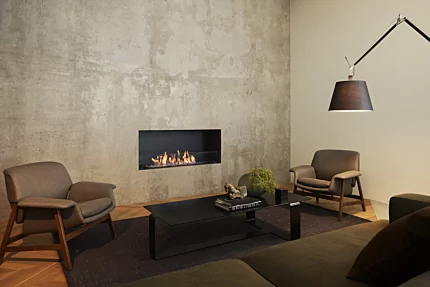
For decades the brief was the same: if a project wanted a built-in fireplace, the architect drew the chimney first and the plan second. Flue penetrations dictated where walls could fall, where structure had to be reinforced, where the roofline broke. The fireplace stopped being a design decision and became a structural one.
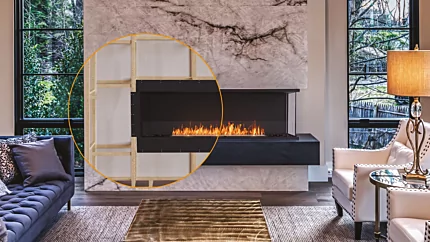
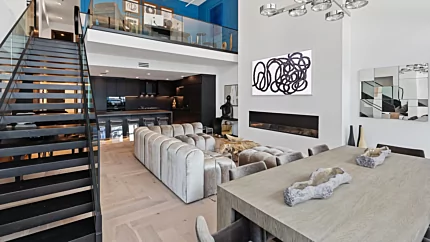
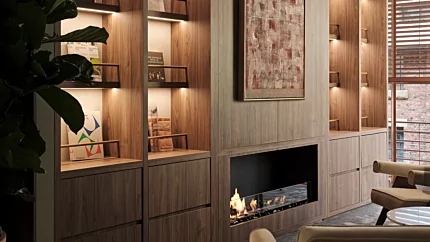
That gap, between what designers wanted on the wall and what conventional combustion forced on the building, persisted because the only realistic alternative used to be “no fireplace at all”. Don’t let flue requirements dictate your floor plan. Built-in fireplaces without chimney shift the constraint from the building shell to the burner itself, and two technologies now carry that load credibly: clean-burning bioethanol, which combusts to water vapour and carbon dioxide, and resistive or LED electric, which produces no combustion at all. Across the built-in fireplace category, this principle plays out through five EcoSmart Fire ranges, Flex, Frame, Heritage, Switch and Motion, plus a set of standalone ethanol burners for fully custom builds.