Renewable fuel source benefits
The environmental impact of different fireplace types varies significantly based on their fuel sources and combustion efficiency.
Wood fireplaces use a technically renewable resource, but forest regeneration takes decades, and inefficient burning can contribute to deforestation concerns. Additionally, wood burning produces significant particulate matter that contributes to air pollution.
Gas fireplaces rely on non-renewable fossil fuels extracted through potentially environmentally damaging processes. While cleaner burning than wood, they still contribute to greenhouse gas emissions and resource depletion.
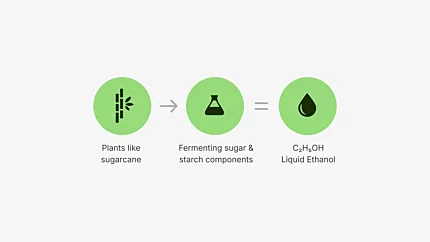
Bioethanol represents the most sustainable option for modern fireplaces, produced from agricultural by-products that would otherwise go to waste. The production process creates a closed carbon cycle where the CO2 released during burning is offset by what the plants absorbed during growth.
Environmental advantages of bioethanol:
Produced from renewable agricultural materials
Forms part of a natural carbon cycle
Reduces dependence on non-renewable resources
Creates minimal waste products
Supports sustainable agricultural practices
Offers a lower carbon footprint than fossil fuels
Minimising carbon footprint
The environmental benefits of bioethanol fireplaces extend beyond their renewable fuel source. While all combustion processes produce carbon dioxide, bioethanol creates significantly lower emissions compared to wood or gas alternatives.
Wood burning produces the highest level of emissions, including carbon monoxide, nitrogen oxides, and particulate matter that can affect both indoor and outdoor air quality. Gas burns more cleanly but still produces carbon dioxide and potential nitrogen oxide emissions.
Bioethanol produces primarily carbon dioxide and water vapour in quantities comparable to human breath or burning candles, making it the cleanest burning option for environmentally conscious homeowners.