Loading image...
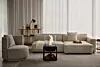
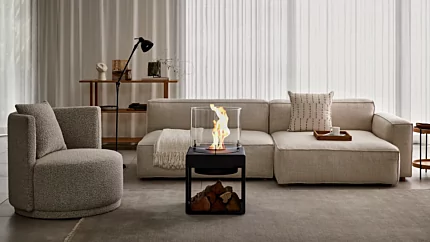
Pop 8L Designer Fireplace
For decades, a fireplace meant a wall. A flue. A chimney engineered before the floor plan was even finalised. Architects accepted the constraint, designers worked around it, and homeowners assumed that's how fire belonged in a room. That assumption is starting to look outdated. A new generation of designer fireplaces is treating flame the way a studio treats a sculpture or a sofa, as a curated object you place into a space rather than a structural feature you build the space around. The shift is small in language and significant in consequence.
Loading image...
Pop 8L Designer Fireplace
A designer fireplace is a fireplace conceived as a piece of furniture or sculpture first, and a heat source second. It uses considered materials, intentional proportions, and a recognisable visual identity to function as a focal point in an interior, rather than a utility appliance hidden behind a mantelpiece.
The distinction matters because most of the fireplace market still thinks in terms of inserts, surrounds, and BTU ratings. Designer pieces invert that hierarchy. The form leads, the flame justifies it, and the heat is a welcome consequence rather than the point. You see this most clearly in contemporary designer fireplaces that arrive as freestanding, sculptural objects, with the burner engineered to disappear behind the surface treatment.
Elizabeth Stamp's editorial work for Architectural Digest describes the fireplace as "the glowing centerpiece of any room", and the framing fits. A designer fireplace earns that centrepiece status through bespoke design choices, not through the volume of warmth it pushes into the air. It is a statement piece in the literal sense: it states something about the room, the owner, and the way the space is meant to be used.
Loading image...

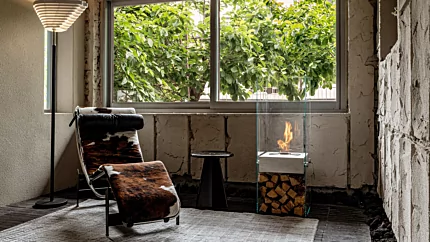
Ghost Designer Fireplace
Fire furniture describes free-standing flame objects designed to live in a room the way a chair or a console does, with no fixed plumbing, no chimney, and no permanent connection to the building. The category is enabled almost entirely by ventless bioethanol technology, which removes the structural assumptions traditional fireplaces depend on.
That technical anchor is short but important. Bioethanol burns cleanly into carbon dioxide and water vapour, which means no flue, no gas line, no soot, and no structural load above the burner. Stephane Thomas, Director of MAD Design Group, puts the design implication directly: "Most other types of fireplaces require a connection to gas or electricity, which can limit options for designers. EcoSmart ventless fireplaces require no connections or venting, which further enhances the design options." A piece like the new Mello can stand on a polished concrete floor in a loft, or move to the centre of a dining room for a winter dinner, without a single trade involved.
The Ghost takes the idea further. It is essentially a transparent vessel for a flame, designed to be placed almost anywhere a low-profile object would sit, including a corner that no conventional fireplace could occupy. That kind of placement freedom is what reframes portability. In a traditional brief, "portable" reads as compromise: smaller, cheaper, less serious. In the design context, portability is the premium attribute. It is what lets a fire move with the seasons, follow a renovation, or anchor an installation no architect would have specified twenty years ago.
A piece that can be repositioned is a piece you can keep editing the room around, long after the build is finished.
Loading image...
Pillar 3T Designer Fireplace
Minimalism in this category is not a finish. It is a decision to remove visual noise so the surrounding architecture and materials carry more of the room. A minimalist designer fireplace is engineered to recede when the flame is off and assert itself only when it is lit. The result is clean line aesthetics that are architectural rather than decorative.
This is why the same fireplace can sit comfortably inside a Japandi interior of pale timber and washi paper, a contemporary apartment with concrete and brushed steel, or a quiet luxury home built on travertine and bouclé. The minimalist features do the cultural work; the materials around the fireplace carry the personality. The Pop Series shows the other side of the philosophy, with retro-modern silhouettes that read as deliberate sculpture in a room that would otherwise be visually quiet.
The discipline shows up in the details: a single welded seam, a recessed burner tray, a stainless surface that catches reflected light. Nothing decorative. Everything intentional.
A few practical considerations narrow the field quickly. Scale matters first: larger units in the EcoSmart Fire range produce up to 20,433 BTU/hr (6 kW), enough to make a thermal and visual presence in spaces over 60 m² [645 sq ft], while smaller pieces are tuned for intimacy rather than coverage. Indoor and outdoor suitability varies by model, so confirm before specifying. Freestanding forms preserve placement freedom and can move with a renovation; built-in models read as more permanent architecture and suit new builds where the fireplace is part of the original drawing rather than a retrofit. For larger projects, bringing in a specifier at the briefing stage makes integration easier: a fireplace conceived as a focal point from the start carries more authority than one chosen after the furniture plan is settled.
Around 78% of homeowners now treat a fireplace as essential or highly desirable, according to the 2024 NAHB survey, and the research from Christopher Lynn's team at the University of Alabama explains part of the reason: even fifteen minutes of watching a flame measurably lowers blood pressure. The case for fire in a home is no longer aesthetic alone. The case for designer fireplaces is that the object delivering that effect deserves the same design rigour as everything else in the room.
Explore the full EcoSmart Fire designer fireplace range and find the form that works for your space.