Loading image...


Loading image...


Bioethanol has emerged as a sophisticated renewable energy source that powers ventless fireplaces without the smoke, soot, or ash associated with traditional wood-burning options.
Yet not all bioethanol fuel performs equally. The purity level, specifically the alcohol content, directly influences performance, safety, and the overall user experience. Premium bioethanol fuel typically contains 96-97% ethanol by volume, with the remaining 3-4% consisting of water and small amounts of denaturants. This precise formulation represents the optimal balance between combustion efficiency, flame quality, and practical safety considerations.
Bioethanol, at its essence, is denatured alcohol derived from plant materials through an efficient biomass conversion process. This renewable energy source begins its journey in agricultural fields, where crops such as sugarcane, corn, and wheat capture carbon dioxide from the atmosphere through photosynthesis.
The biomass conversion process transforms these plants into clean-burning fuel through fermentation. The ethanol is then distilled to concentrate the alcohol content, creating the high-purity liquid fuel used in ventless fireplaces.
Bioethanol qualifies as a sustainable biofuel because it completes a carbon-neutral cycle—the carbon dioxide released during combustion equals the amount absorbed by the plants during growth.
Bioethanol fuel is intentionally denatured—additives such as methanol or Bitrex are introduced to make it unfit for consumption. This both ensures safety and regulatory compliance. Denaturants in premium ventless fireplace fuel are chosen to minimise odour and maintain combustion quality.
At about 95.6% ethanol concentration, ethanol and water form an azeotropic mixture. Here, distillation cannot further separate them because the vapour and liquid share the same composition. Breaking this limit requires advanced techniques like molecular sieves or pressure-swing distillation, but for fireplaces, this level of purity is already ideal.
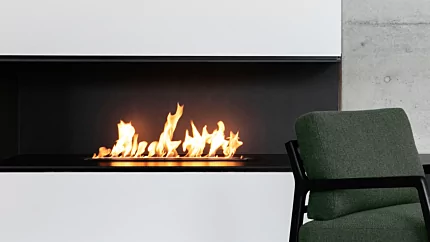
This purity range achieves a perfect balance: it burns hot enough for beautiful, orange flames and complete combustion but retains enough water to slow evaporation slightly. This stabilises flame behaviour and optimises burn duration while minimising risks associated with over-pure ethanol.
High-purity bioethanol burns completely, combining ethanol with oxygen to produce only carbon dioxide, steam, and heat. When water content or impurities increase, combustion becomes incomplete—resulting in reduced heat output and a less steady flame.
Premium burners using 96-97% fuel, such as EcoSmart Fire’s e-NRG, can deliver between 5,000 and 20,000+ BTU/h depending on burner size. Because the systems are ventless, nearly all generated heat radiates into the living space.
Water content above 4% demands extra energy for evaporation, reducing overall heat output and shortening burn time. Users consume more fuel and experience lower heating performance.
Low-purity fuels often contain fusel alcohols that cause unpleasant smells. Impurities lead to noticeable odours, interfere with indoor air quality, and detract from a fireplace’s clean-burning appeal.
Incomplete combustion leads to carbon residue—visible as black soot. Over time, this builds up on stainless steel or glass components, increasing maintenance requirements and potentially damaging the fireplace’s finish.
Ultra-pure ethanol evaporates quickly, reducing controlled burn time and stability. This rapid evaporation can create aggressive burning behaviour that feels less comfortable and wastes fuel more rapidly.
Fireplace burners are safety-tested specifically for 96-97% bioethanol fuel. Ultra-pure ethanol can degrade seals or affect burner materials. Using overly refined fuel can reduce lifespan and void product certification or warranties.
Look for transparency in ethanol content (96-97%), clear liquid appearance, mild odour, and verified safety documentation. Laboratory or pharmaceutical production standards signal consistent performance.
Avoid fuel with cloudy appearance, strong chemical odours, missing safety labels, or very low pricing. Generic industrial methylated spirits are unsuitable for ventless fireplace use.
Premium fuel like e-NRG provides optimal purity and is engineered for balanced performance. Odour-minimising denaturants, long burn duration, and safety packaging (such as flame arresters) distinguish it from cheaper alternatives.
Using premium 96-97% bioethanol ensures stable, vibrant flames with consistent heat output. Ideal purity preserves flame stability and prevents low-flame issues during operation.
Clean combustion preserves stainless-steel components and prevents soot accumulation. With quality fuel, fireplace maintenance becomes minimal while preserving product longevity.
The ideal bioethanol purity of 96-97% delivers perfect balance—efficient combustion, controlled heat, long burn times, and a beautiful flame. Lower purity causes inefficiency and residue; higher purity burns too fast. For dependable performance, safety, and sustainability, certified ventless fireplace fuel like e-NRG is the smart choice for homeowners, designers, and builders seeking a truly carbon neutral fuel solution.