Blog

  /  

Ethanol, Propane, or Natural Gas: Which Fuel Type Is Right for Your Fire Pit Kit?

Ethanol, Propane, or Natural Gas: Which Fuel Type Is Right for Your Fire Pit Kit?

The fuel that powers a fire pit kit decides almost everything else about it. Where it can sit, how it lights, what it costs to run, who has to install it, and whether a guest can sit beside it indoors on a wet July evening. Most buyer guides treat that decision as a binary between propane and natural gas, then bolt bioethanol on as an afterthought called "decorative." That framing collapses the moment you look at the EcoSmart range, where bioethanol is a genuine performance fuel sitting alongside gas, with the same burner hardware, the same certifications, and the only indoor rating in the catalogue.

This article walks through all three fuels at the depth a specifier actually needs. Real heat output in BTU/hr and kW. Burn time per refuel. Certifications by market. The installer requirement. The placement rules. And the running-cost picture, which is the spec almost every competing guide quietly leaves out for bioethanol. By the end you'll know which fuel suits your project, and which of the six EcoSmart fire pit kit models you can build it into, because every one is available in all three configurations.

Published:
· Updated:

The three fuel types at a glance

Loading image...
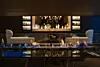
thumbnail: webimage-Linear-65-Fire-Pit-KitEcoSmart Fire Linear 65 Fire Pit Kit enhances a private residence with a sleek built-in ethanol fireplace for living and bar areas.

EcoSmart fire pit kits run on bioethanol, liquid propane, or natural gas, and the right choice depends on where the pit will live and what utilities are available at the site. Bioethanol is the only EcoSmart fuel rated for indoor use, certified under EN 16647 and UL 1370. Liquid propane and natural gas fire pit kits share the same burner hardware and produce up to 65,000 BTU/hr (19 kW) per burner. Natural gas fire pit kits require a licensed installer and an orifice swap from the default propane configuration. The table below summarises the three options before each section goes deeper.

Spec

Bioethanol

Liquid propane

Natural gas

Peak heat per burner

15,000 to 45,000 BTU/hr (4.4 to 13.2 kW) across the range

65,000 BTU/hr (19 kW)

65,000 BTU/hr (19 kW)

Burn time per refuel

7.5 to 13 hours on a single fill

8 to 20 hours per cylinder

Unlimited on a fixed line

Indoor eligible

Yes, with compliance kit

No

No

Ventilation rule

Minimum room volume for indoor use

Outdoor only

Outdoor only

Install complexity

Drop-in, no utilities required

Connect a cylinder

Licensed gas installer required

Certifications

UL 1370, EN 16647, ACCC

ANSI Z21.97-2017, CE, UKCA

ANSI Z21.97-2017, CE, UKCA

Best for

Indoor lounges, covered terraces, sites without gas access

Movable outdoor installations, holiday homes

Permanent outdoor installations with an existing gas line

The three fuel types at a glance

All six EcoSmart fire pit kit configurations are available in any of the three fuel options: Round 20, Square 22, Linear 50, Linear 65, Linear 90, and Linear 130. The shape decision and the fuel decision are independent.

Bioethanol fire pit kits: the indoor-capable option

Loading image...

thumbnail: webimage-Square-22-Fire-Pit-KitEcoSmart Fire Square 22 Fire Pit Kit is built into the Lexus Kamisu courtyard, creating smokeless focal fire for alfresco gatherings.

Bioethanol fire pit kits are the only EcoSmart configuration rated for indoor use, and that single fact reframes the rest of the comparison. A bioethanol burner needs no flue, no gas line, no licensed installer, and no permanent fuel supply. It draws liquid e-NRG bioethanol from a sealed reservoir, burns it through an engineered combustion chamber, and produces flame, heat, water vapour, and CO2, and nothing else. No smoke. No soot. No ash on the tray to vacuum out in the morning.

Heat output across the bioethanol range scales with burner count. The compact Round 20 fire pit kit and Square 22 each run a single AB8 burner producing 20,433 BTU/hr (5.99 kW) and burn for roughly 7.5 to 9 hours on a full 8-litre reservoir. The linear range steps up through the single-burner Linear 50 and Linear 65 at 15,000 BTU/hr (4.4 kW), the twin-burner Linear 90 fire pit kit at 30,000 BTU/hr (8.8 kW), and tops out with the triple-burner Linear 130 fire pit kit at 45,000 BTU/hr (13.2 kW).

Certifications are where the bioethanol picture gets serious. EcoSmart's AB8 and XL900 burners are O-TL listed to UL 1370 in the United States and Canada, EN 16647 BSI Certified in the UK and EU, and ACCC Safety Mandate compliant in Australia. This is the same standard the U.S. Consumer Product Safety Commission used to distinguish certified appliances from the unengineered pooled-alcohol products its 2025 consumer alert pulled from sale. Pooled-alcohol fire pits and pressure-controlled, UL 1370-certified burner systems are categorically different products, and conflating them is one of the reasons bioethanol gets unfairly written off elsewhere.

When bioethanol is the right choice

Bioethanol shines in any project where running a gas line is impossible, undesirable, or simply not worth the disruption. The list of contexts where it's the right call is longer than competitors usually admit.

  • Indoor lounges, formal living rooms, and entertaining spaces with adequate room volume

  • Covered terraces, pergolas, and partially enclosed outdoor areas where gas appliances aren't permitted

  • Apartments, condos, and heritage buildings without gas access or where flue penetration isn't viable

  • Hospitality fit-outs where vent-free design opens up centre-of-room placement and architectural focal points

The brands EcoSmart cites as commercial references (W Hotels, Ritz-Carlton, Marriott, Four Seasons, Hyatt, Hilton) overwhelmingly specify bioethanol for indoor applications precisely because nothing else can sit inside a lobby or guest lounge with a stainless steel burner and an open flame.

Bioethanol limitations to know upfront

Bioethanol is a performance fuel but it isn't the highest-output fuel in the EcoSmart range, and the trade-offs are worth naming directly. The peak heat output of even the Linear 130 (45,000 BTU/hr) is well below a single gas burner at 65,000 BTU/hr, so for raw warmth across a windswept outdoor entertaining area, gas wins on absolute output. Indoor use carries minimum room-volume requirements: the AB8 burner needs at least 116 m³ (4,097 ft³) under BS EN 16647 to ensure adequate air exchange, and the National Energy Foundation advises particular attention to ventilation for rooms below 40 cubic metres regardless of compliance pathway. Only e-NRG bioethanol delivers the rated performance figures; lower-purity fuels cause incomplete combustion, odour, and soot. And unlike a fixed natural gas line, bioethanol needs refuelling between extended sessions. None of these are deal-breakers. They're specification details that influence which model and which fuel suits a given brief.

Liquid propane fire pit kits: the portable outdoor option

Loading image...

thumbnail: webimage-Linear-65-Fire-Pit-KitLinear 65 Fire Pit Kit

Liquid propane is the no-utility-required outdoor choice. The same EcoSmart kit configuration that ships as bioethanol becomes a propane kit with a different burner head and a hose to a standard LP cylinder. Heat output jumps to 65,000 BTU/hr (19 kW) per burner, which on the Linear 130 means three burners producing a combined 195,000 BTU/hr (57 kW). A single 9 kg cylinder runs for roughly 8 to 20 hours depending on flame setting and ambient temperature, so a typical evening uses a small fraction of one tank.

The case for propane is mostly about flexibility. Because the fuel travels in a cylinder rather than down a buried line, the entire installation is mobile. A propane pit can move when a deck gets rebuilt, follow a holiday-home owner between properties, or stay outdoors year-round in climates where natural gas pressure drops in deep cold. The cylinder also sits inside the kit's enclosure or in a discrete adjacent cabinet, so no plumber, no permit, and no trenching are involved at install. The cost story is roughly an entry-level setup against the four-figure trenching and permit picture for natural gas reported in HomeAdvisor's 2025 cost data.

On the certification side, EcoSmart's gas burners are UL/ULC listed to ANSI Z21.97-2017 and CSA 2.41-2017 in North America, CE marked under Gas Appliance Regulation 2016/426 in the EU, and UKCA marked in the UK. The 2017 ANSI revision added rain testing, capped exposed-surface temperatures at 78°C (172°F), and introduced wind resistance tests at 16 km/h (10 mph) and 50 km/h (31 mph), meaningful upgrades for an appliance that lives outside year-round. EcoSmart publishes clearance and non-combustible surface requirements in a dedicated fire pit kit safety reference, which any gas configuration needs to follow.

When propane is the right choice

Propane is the answer almost any time the site lacks a gas line and the pit needs to live outdoors with reliable cold-weather performance.

  • Outdoor decks, patios, and courtyards without an existing gas supply

  • Holiday homes, rentals, and projects where the pit may be moved or relocated

  • Cold-climate sites where natural gas line pressure drop becomes a concern

Natural gas fire pit kits: the always-on permanent option

Loading image...

thumbnail: webimage-Linear-130-Fire-Pit-KitEcoSmart Fire Linear 130 Fire Pit Kit built into a commercial balcony, ventless bioethanol warmth for outdoor seating.

Natural gas is the set-and-forget outdoor configuration. The burner hardware is identical to the propane version: same UL/ULC listing, same 65,000 BTU/hr (19 kW) per burner output, same six-model lineup from Round 20 up to Linear 130, but plumbed into a fixed gas line rather than a cylinder. Once installed, burn time is unlimited and refuelling is no longer a calendar entry. For restaurants, hospitality venues, primary residences, and any application where the pit gets used several times a week, that's the difference between a service ritual and a switch.

Natural gas fire pit kits require a licensed installer and an orifice swap from the default propane configuration. EcoSmart ships every gas kit in the propane orifice setup as the default, so a competent gas technician converts it on site to suit local natural gas pressure. This isn't a step to attempt as DIY. Gas plumbing is licensed work in every market EcoSmart sells into, and the certification chain only holds if the conversion is done correctly. Honest cost framing matters here: natural gas commands the highest upfront install cost of the three fuels because of the line work, trenching, and permits, but it then delivers the cheapest running cost per kWh of any option once the line is in. For more on whether a kit makes sense versus a from-scratch masonry build at this cost point, see our analysis of kit versus custom build.

A brief aside on global availability before the next section: EcoSmart's gas and electric products are not sold in Australia, so an Australian project running natural gas through an EcoSmart kit is not an option. Australian customers spec bioethanol; the rest of the EcoSmart international footprint covers all three fuels.

When natural gas is the right choice

Natural gas wins whenever the site has a fixed line and the fire pit is staying put for the long haul.

  • Permanent installations on private land with an existing or accessible gas supply

  • Restaurants, hotels, and hospitality venues where refuelling logistics would otherwise eat staff time

  • Long-tenure residential projects where ten years of running-cost savings outweigh higher install cost

Side-by-side comparison: heat, burn time, and installation

The fuel choice ultimately comes down to three numbers, and the table below holds them in one place across all six models. Two patterns are worth sitting with after you read it. First, gas delivers roughly 1.5× to 13× the peak BTU of bioethanol depending on which model you compare, but those are peak figures, not effective warmth, and bioethanol's flame profile and radiant heat distribution differ meaningfully from a high-output gas burner, so raw BTU comparisons don't translate directly to perceived warmth. Second, bioethanol's burn time per refuel is broadly comparable to propane's burn time per cylinder, despite competitors framing bioethanol as having "short" run times.

Model

Bioethanol heat output

Gas heat output

Bioethanol burn time

Gas burn time (LP)

Indoor eligible

Round 20 fire pit

20,433 BTU/hr (6 kW)

65,000 BTU/hr (19 kW)

~9 hours

8 to 20 hours

Bioethanol only

Square 22 fire pit

20,433 BTU/hr (6 kW)

65,000 BTU/hr (19 kW)

~7.5 hours

8 to 20 hours

Bioethanol only

Linear 50

15,000 BTU/hr (4.4 kW)

65,000 BTU/hr (19 kW)

~10.5 hours

8 to 20 hours

Bioethanol only

Linear 65 fire pit

15,000 BTU/hr (4.4 kW)

65,000 BTU/hr (19 kW)

8 to 13 hours

8 to 20 hours

Bioethanol only

Linear 90

30,000 BTU/hr (8.8 kW)

130,000 BTU/hr (38 kW)

~8 hours

8 to 20 hours

Bioethanol only

Linear 130

45,000 BTU/hr (13.2 kW)

195,000 BTU/hr (57 kW)

~8 hours

8 to 20 hours

Bioethanol only

Side-by-side comparison: heat, burn time, and installation

Installation complexity scales bioethanol to propane to natural gas, in that order. A bioethanol kit drops into a non-combustible surround with no utility connection at all: pour the fuel, light the burner, you're done. Propane adds a cylinder and a regulated hose connection, which most homeowners can handle competently. Natural gas adds the trenched line, the orifice conversion, and the licensed installer, and that's where the cost and timeline jump. The independent question of which kit shape suits your space (round, square, or linear) runs in parallel to the fuel decision and is covered separately.

Running cost per hour: the honest fuel-cost comparison

Running cost is the spec almost every competing fuel guide quietly omits for bioethanol, and the reason is straightforward. Bioethanol's cost per hour sits in the moderate-to-premium tier and varies meaningfully by region: e-NRG is sold by the litre in Australia and the UK, by the gallon and quart in the US and Canada, and is not distributed in the European Union (EU customers source their bioethanol from local suppliers). Within any given market the spend per evening is predictable, but it's higher per kWh delivered than natural gas, and roughly comparable to propane at low-to-medium flame settings.

Propane sits in the moderate tier with very stable per-cylinder economics. Cylinders are a commodity, refill costs barely change across a year, and a typical evening of use consumes a fraction of a tank, so the per-hour cost is predictable and easy to budget for a hospitality operator or homeowner alike.

Natural gas is the cheapest of the three on a per-kWh basis once the line is paid off. The headline upfront installation cost is significantly higher than propane setup or a bioethanol kit, but the ongoing fuel cost is the lowest of any option in this article. The break-even point depends on how many hours a year the pit actually runs. A hospitality courtyard burning through 1,500 hours a year crosses the break-even inside the first year, while an occasional-use suburban deck might not for a decade. That's the lens to apply rather than headline running cost alone.

Indoor, outdoor, and covered spaces: where each fuel can go

Loading image...

thumbnail: webimage-Square-22-Fire-Pit-KitEcoSmart Fire Square 22 Fire Pit Kit installed on a residential patio creates a modern outdoor focal point with clean-burning ethanol and brushed chrome finish.

The placement rule for EcoSmart fire pit kits is genuinely simple. Bioethanol is rated for both indoor and outdoor use, including covered outdoor spaces, provided the room volume requirement is met and (for indoor) the AB8 Burner Efficiency Ring and Indoor Safety Tray are fitted to bring the kit into EN 16647 compliance. Liquid propane and natural gas configurations are outdoor-only, and "outdoor" here means uncovered or genuinely open-sided structures, never a fully enclosed pergola, garage, or covered alfresco where combustion byproducts can accumulate.

Space type

Bioethanol

Propane

Natural gas

Indoor (compliant room volume)

Yes

No

No

Covered outdoor (pergola, partial enclosure)

Yes, with ventilation review

Case by case

Case by case

Open outdoor

Yes

Yes

Yes

Indoor, outdoor, and covered spaces: where each fuel can go

The deeper indoor versus outdoor decision framework, including how to size a room for compliant bioethanol installation, is covered in our indoor vs outdoor guide.

Certifications and global availability

EcoSmart's certifications stack covers every major market the brand sells into, with parallel coverage for both bioethanol and gas configurations. For bioethanol, the AB8 and XL900 burners are O-TL listed to UL 1370 in the US and Canada, EN 16647 BSI Certified in the UK and EU, and ACCC Safety Mandate compliant in Australia. In Australia, the ACCC mandate requires flame arresters in all bioethanol fuel containers, a requirement e-NRG exceeds by integrating the arrester directly into its proprietary Safety Spout.

For gas, both propane and natural gas configurations are UL/ULC listed to ANSI Z21.97-2017 and CSA 2.41-2017 in North America, CE marked under Gas Appliance Regulation 2016/426 in the EU, and UKCA marked in the UK. The 2017 ANSI revision tightened the standard with rain testing, a 78°C (172°F) exposed-surface temperature cap, and wind resistance tests at 16 km/h (10 mph) and 50 km/h (31 mph).

Two availability rules apply globally and override anything a regional storefront might suggest at the UI level. First, EcoSmart gas and electric products are not sold in Australia. Australian customers can only spec bioethanol for fire pit kits. Second, e-NRG bioethanol fuel is not distributed in the European Union; bioethanol fire pit kits still ship to EU customers, but the fuel itself is sourced locally from a non-e-NRG supplier. The fire pit kit is the same kit; only the fuel-supply route changes. Both rules matter when planning a project across multiple markets, particularly for hospitality groups specifying a consistent design palette across regional properties.

How to choose: a quick decision framework

The fuel decision usually resolves in three questions. Work through them in order and you'll land on the right answer for almost any project.

  1. Will the fire pit live indoors or in a covered space where gas appliances aren't permitted? If yes, bioethanol is the only option in the EcoSmart range that's rated for that placement.

  2. Will the pit live permanently in one outdoor location on a site with an existing gas line, and is the project willing to absorb a licensed install? If yes, natural gas delivers the lowest ongoing fuel cost and unlimited burn time.

  3. Will the pit live outdoors with no fixed gas supply, in a cold climate, or in a location it may be moved from? If yes, propane is the right call: high heat, portable, and no licensed install required.

Hybrid scenarios are common, particularly in hospitality. A hotel running bioethanol in the lobby lounge and natural gas in the open-air courtyard is using the same EcoSmart kit shape across both spaces, with the fuel decision tuned to each placement independently. The shape and size decision sits separately from the fuel decision, which is what makes the EcoSmart range flexible to spec.

Where to go from here

Loading image...

thumbnail: webimage-Linear-Curved-65-Fire-Pit-KitEcoSmart Fire Linear Curved 65 Fire Pit Kit installed on a private residence deck creates a striking indoor feature with clean-burning ethanol and black finish.

The fuel decision is one of three independent calls in any fire pit kit project (fuel, shape, and surface), and once it's made the other two slot into place quickly. Bioethanol if the pit is going indoors or under cover. Natural gas if it's permanent, outdoor, and the site has a line. Propane for everything else outdoors.

The next decisions to work through are the shape of the kit, the surface and clearance requirements at the install site, and the choice between an off-the-shelf kit and a custom build. EcoSmart's complete fire pit kit guide walks through models, sizes, and installation in one place, and the full lineup of configurations is available on the fire pit kits category page when you're ready to specify.

References

Related Articles

Fire Pit Kits

Fire Pit Kits vs Custom Build: A Practical Guide for Design Professionals

Outdoor fire features are more than just design statements - they’re about bringing people together, elevating the atmosphere, and crafting an enduring impression. But behind the scenes, design professionals know the real challenge: balancing creativity with the need for reliable, efficient project delivery.